
Ceramic vs Porcelain Tiles: Which Is the Right Fit for Your Space?
Choosing the right flooring for a new build or home renovation is a massive job. You aren't just looking for something that looks good; you need a surface that can cope with the daily chaos of family life or heavy foot traffic without looking worse for wear. It's incredibly easy to get bogged down by the sheer number of options on the market right now. Whether you're tracking down premium porcelain tiles in Sunshine for a big commercial project or you're tossing up standard ceramics for a quick bathroom update, you already know the choices are endless.
Even though these two substances may seem to be quite alike on the surface, there are several underlying distinctions that one should be aware of. It can become handy while considering the process from production in the factory to durability in daily use.
The Basic Differences
You can determine which material is more beneficial by knowing how both materials are made. The process for forming porcelain and ceramics can be nearly identical, with the exception that they will use much different temperatures during the heating process.
- Temperature of Heat: Porcelain is produced by subjecting compacted clay to an extremely high temperature. The temperature required to produce ceramics is not as high as that required to produce porcelain since the clay used in producing ceramics is not as compacted.
- Moisture Resistance: As the porcelain is heated at high temperatures, they become very durable and a water-resistant solution for your home. It also has less porosity. Ceramic doesn’t hold up quite like porcelain when it comes to toughness. Left standing, spills might slowly seep into its surface over hours. Water tends to creep in if given enough time sitting there.
Where Porcelain Can Fit Best
- Handling Daily Foot Traffic: When we talk about sheer durability and resilience, porcelain really shines as the heavy lifter of the flooring world. It is a very hard material that can handle the heavy traffic pressure without breaking. For hallways or family living, this tile option is the best for flooring.
- Scratch Resistance: Flooring takes hits now and then; porcelain floor tiles handle them well. Bumps from fallen utensils? Hardly a concern. Tiny scrapes fade into normal wear. This toughness makes it the right fit for kitchens.
- Requires Easy Cleaning: Spills stay on top without affecting the surface. That keeps marks away without any effort from you. Plus, keeping them clean is an easy process. You generally don't need to do anything more than some simple mopping and sweeping, with absolutely no need for complex sealing treatments over the years.
Where Ceramic Can Fit Best
- Work Well in Quiet Spaces: Because they cost less than harder options, people often pick them for rooms not used every day. Think of places such as reading corners or a spare bedroom without constant movements. Over time, that light use keeps wearing to a minimum.
- Perfect for Walls: It is a fantastic material for decorative bathroom splashbacks, shower walls, or colourful kitchen feature walls where heavy foot traffic is not an issue at all.
Since the ceramic absorbs the liquids, you need to clean the spills immediately. It is easy to clean, but you need to act fast if the liquid is dark and strong.
How Both Can Help You According to Your Needs
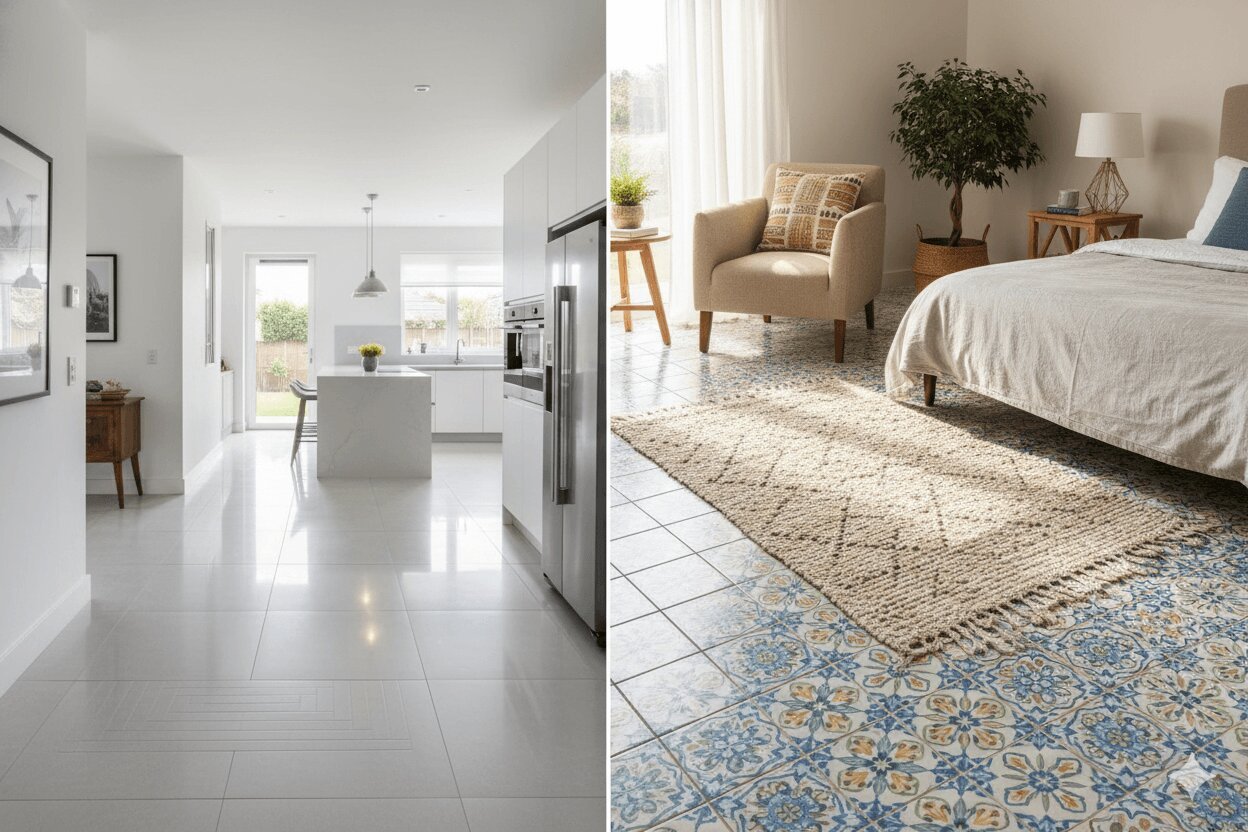
- Various Design Options: The porcelain tiles have a wide range of designs that resemble the elegant marble design. In addition, some of the best terrazzo styles are available. This makes them suitable for various home decor and buildings while costing much less than the real thing.
- Best Designs and Style: Ceramics also provide a wider array of bright, intricate patterns that are perfect for adding a pop of character to a room.
Professional Installation Service
Starting with good tiles matters, yet getting it right takes more than choice. Experts step in once decisions is made, guiding every move. Precision comes through their hands, fitting each piece where it belongs. Their work ensures lasting results, year after year without fail.
Conclusion:
Porcelain is the best when you want to choose it for high traffic and heavily moistened areas. For decorative splashbacks and low-traffic rooms, you can choose the ceramic option. Both options will offer you the benefits you can utilise both of them as per your requirements.








0 Comments